Miami Ocean Bay Boat Rentals
Miami Ocean Bay Boat Rentals
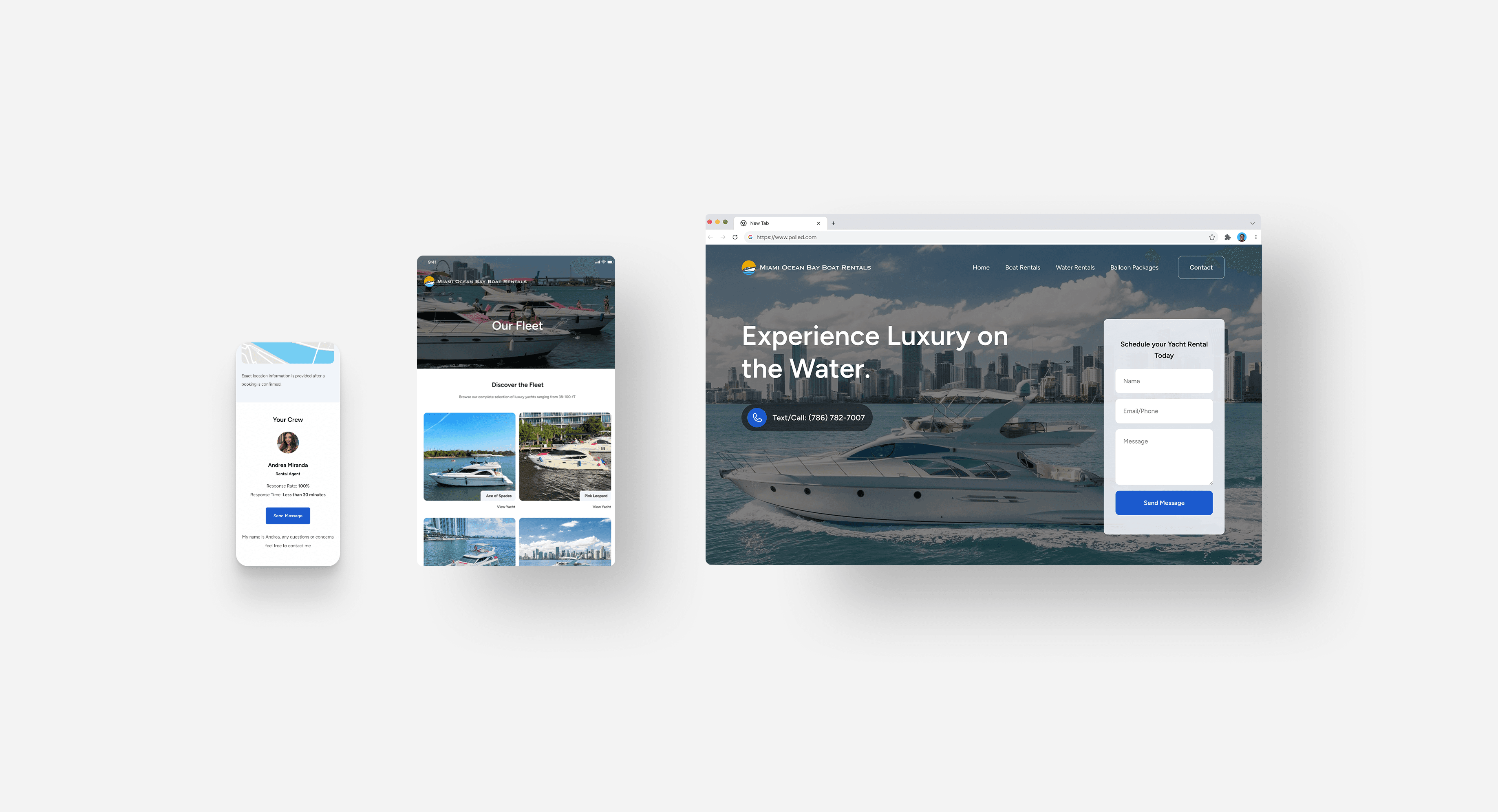
Miami Ocean Bay Boat Rentals helps users explore yachts and plan experiences while all bookings must go through a broker. Users often faced uncertainty when estimating total costs, exploring optional extras, and navigating the expanding fleet. The goal of this project was to reduce friction, clarify pricing, and provide a scalable, intuitive platform that supports confident inquiry without allowing direct booking.
Miami Ocean Bay Boat Rentals helps users explore yachts and plan experiences while all bookings must go through a broker. Users often faced uncertainty when estimating total costs, exploring optional extras, and navigating the expanding fleet. The goal of this project was to reduce friction, clarify pricing, and provide a scalable, intuitive platform that supports confident inquiry without allowing direct booking.
Miami Ocean Bay Boat Rentals helps users explore yachts and plan experiences while all bookings must go through a broker. Users often faced uncertainty when estimating total costs, exploring optional extras, and navigating the expanding fleet. The goal of this project was to reduce friction, clarify pricing, and provide a scalable, intuitive platform that supports confident inquiry without allowing direct booking.
Services
Visual Design
UI & UX Design
Web Design
Industries
Travel & Leisure
E-commerce
Date
December 2025 -January 2026
Services
Visual Design
UI & UX Design
Web Design
Industries
Travel & Leisure
E-commerce
Date
December 2025 - January 2026
Design Process Timeline
Design Process Timeline
Think of this timeline as a map rather than a checklist. It organizes the work into key phases so you can easily explore the project, while the actual design process involved revisiting and refining those phases as the solution evolved.
Think of this timeline as a map rather than a checklist. It organizes the work into key phases so you can easily explore the project, while the actual design process involved revisiting and refining those phases as the solution evolved.
The Problem
The Problem
The Problem
Overview
Overview
The absence of a dedicated fleet browsing experience created friction between interest and broker inquiry.
Problem Statement: If users do not have a structured way to explore available boats, understand what’s included, and see how to move forward, they are less likely to contact the broker—resulting in lost inquiries and reduced booking opportunities.
Users had no centralized way to browse the fleet, compare options, or understand the full boating experience before reaching out. This disrupted momentum at a critical decision point and limited qualified inquiries. The focus of this project was to introduce a scalable fleet experience that bridges exploration and confident broker contact.
The absence of a dedicated fleet browsing experience created friction between interest and broker inquiry.
Problem Statement: If users do not have a structured way to explore available boats, understand what’s included, and see how to move forward, they are less likely to contact the broker—resulting in lost inquiries and reduced booking opportunities.
Users had no centralized way to browse the fleet, compare options, or understand the full boating experience before reaching out. This disrupted momentum at a critical decision point and limited qualified inquiries. The focus of this project was to introduce a scalable fleet experience that bridges exploration and confident broker contact.
The absence of a dedicated fleet browsing experience created friction between interest and broker inquiry.
Problem Statement: If users do not have a structured way to explore available boats, understand what’s included, and see how to move forward, they are less likely to contact the broker—resulting in lost inquiries and reduced booking opportunities.
Users had no centralized way to browse the fleet, compare options, or understand the full boating experience before reaching out. This disrupted momentum at a critical decision point and limited qualified inquiries. The focus of this project was to introduce a scalable fleet experience that bridges exploration and confident broker contact.
The Solution
The Solution
The Solution
Overview
Overview
Structured the rental journey to simplify discovery, increase transparency, and strengthen the path to broker contact.
The responsive website brings boat exploration, add-ons, pricing clarity, and essential trip details into one intentional flow. Information is organized to support comparison and reduce uncertainty before users reach out. By aligning discovery and inquiry within a single system, the experience supports faster decision-making and more qualified booking conversations.
Structured the rental journey to simplify discovery, increase transparency, and strengthen the path to broker contact.
The responsive website brings boat exploration, add-ons, pricing clarity, and essential trip details into one intentional flow. Information is organized to support comparison and reduce uncertainty before users reach out. By aligning discovery and inquiry within a single system, the experience supports faster decision-making and more qualified booking conversations.
Structured the rental journey to simplify discovery, increase transparency, and strengthen the path to broker contact.
The responsive website brings boat exploration, add-ons, pricing clarity, and essential trip details into one intentional flow. Information is organized to support comparison and reduce uncertainty before users reach out. By aligning discovery and inquiry within a single system, the experience supports faster decision-making and more qualified booking conversations.
Constraints
Constraints
Constraints
Phase 1: Discover
Phase 1: Discover
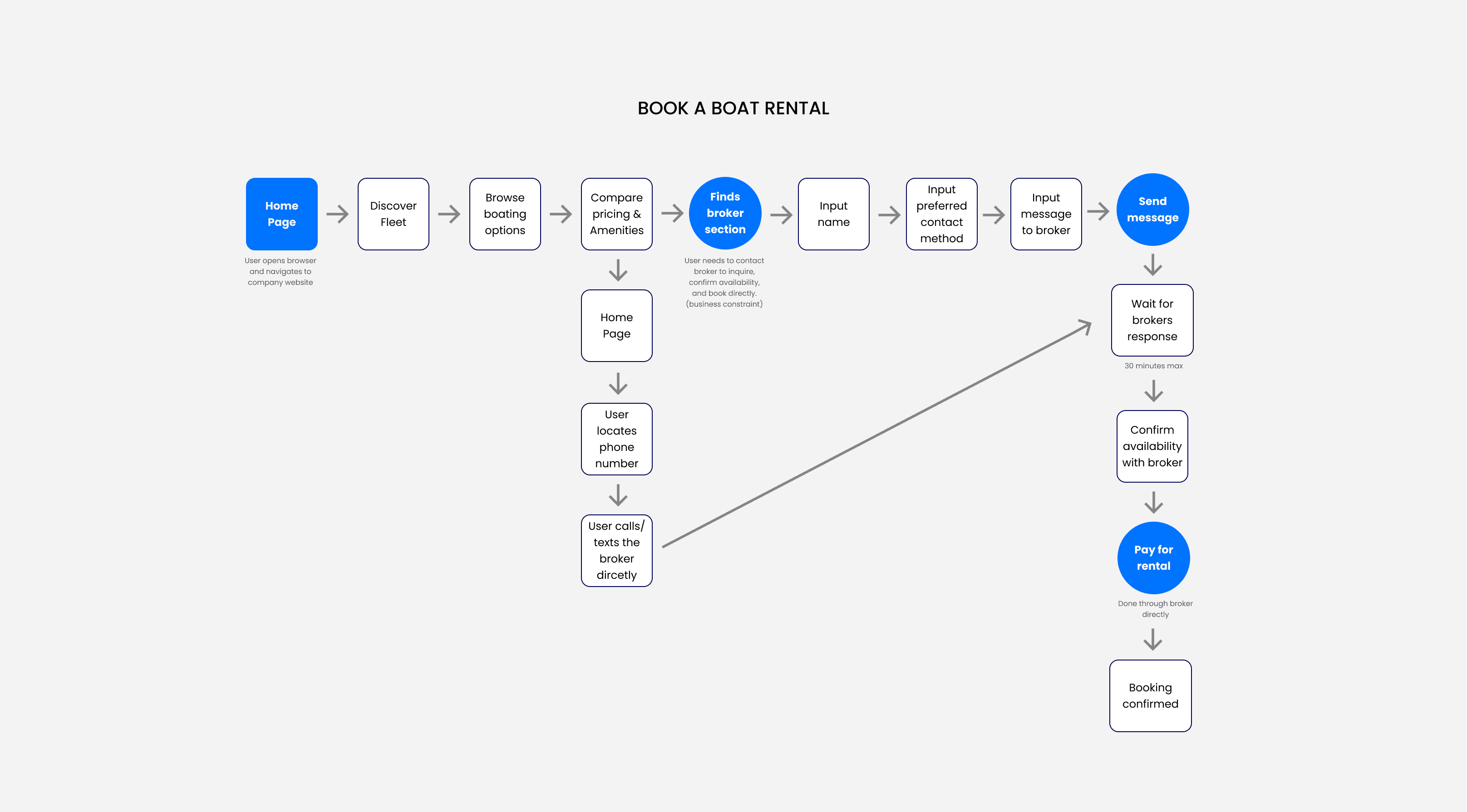
Business rules shaped design priorities and user interactions.
The project operated under key constraints:
Users could not book instantly online
All bookings required broker confirmation
The fleet was initially limited to 4 boats (now 6), requiring a design that could scale with growth.
These limitations shifted the focus from direct conversion to clarity, transparency, and guided exploration. The interface was structured to clearly present boats, add-ons, pricing, and next steps; helping users move confidently from browsing to broker contact.
Business rules shaped design priorities and user interactions.
The project operated under key constraints:
Users could not book instantly online
All bookings required broker confirmation
The fleet was initially limited to 4 boats (now 6), requiring a design that could scale with growth.
These limitations shifted the focus from direct conversion to clarity, transparency, and guided exploration. The interface was structured to clearly present boats, add-ons, pricing, and next steps; helping users move confidently from browsing to broker contact.
Business rules shaped design priorities and user interactions.
The project operated under key constraints:
Users could not book instantly online
All bookings required broker confirmation
The fleet was initially limited to 4 boats (now 6), requiring a design that could scale with growth.
These limitations shifted the focus from direct conversion to clarity, transparency, and guided exploration. The interface was structured to clearly present boats, add-ons, pricing, and next steps; helping users move confidently from browsing to broker contact.
Competitive Analysis
Competitive Analysis
Competitive Analysis
Phase 1: Discovery
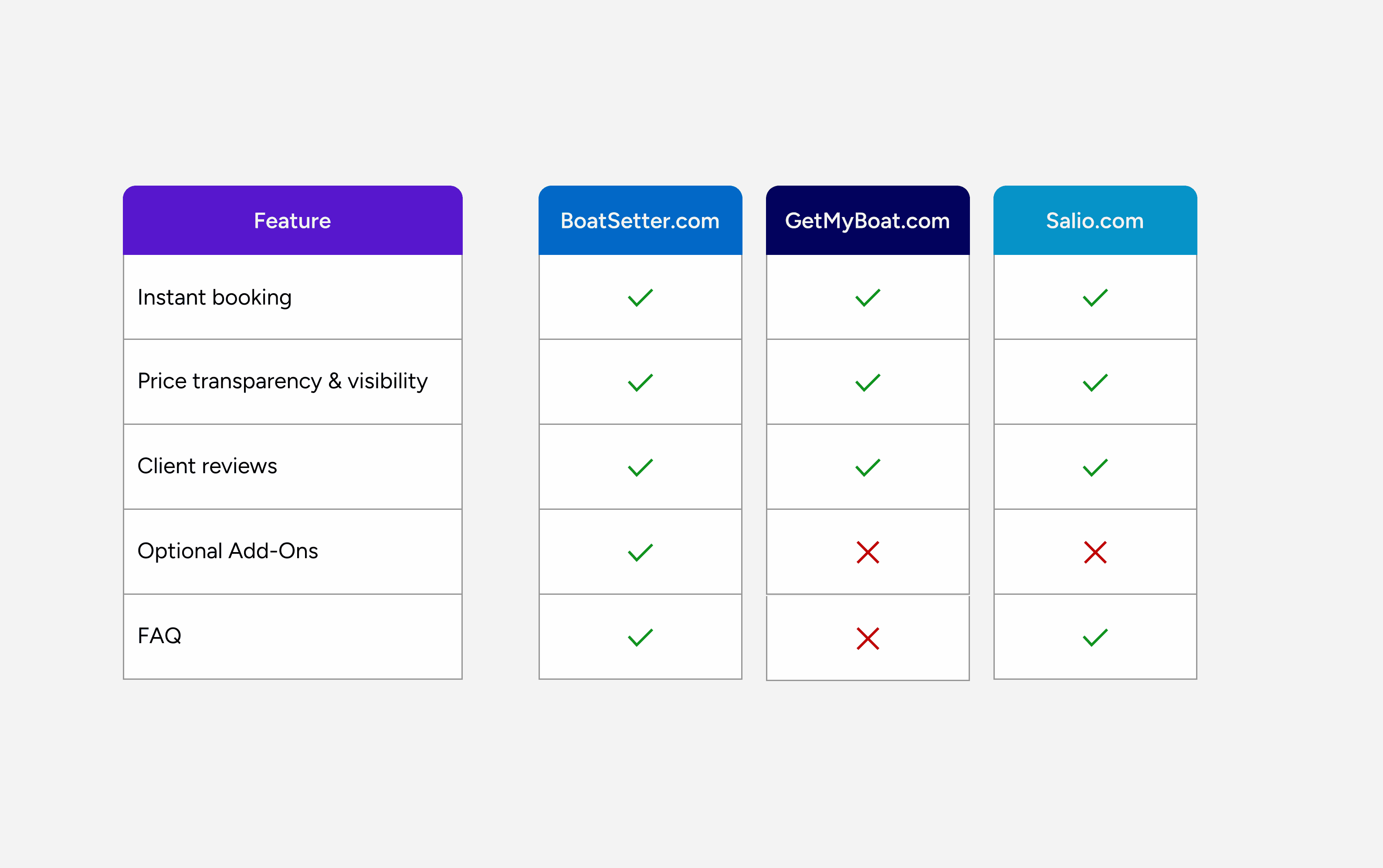
Most competitors miss the opportunity to showcase experience-based add-ons and upgrades.
I reviewed top boat rental platforms like Boatsetter, GetMyBoat, and Sailo to understand how users plan trips. While fleets are presented clearly and direct booking is supported, optional services and upgrades are rarely offered or surfaced, and one platform didn’t even include an FAQ section, reducing transparency and user confidence. This highlighted a clear opportunity to showcase add-ons, clarify services, and provide structured guidance, creating a more confident and curated planning experience.
Most competitors miss the opportunity to showcase experience-based add-ons and upgrades.
I reviewed top boat rental platforms like Boatsetter, GetMyBoat, and Sailo to understand how users plan trips. While fleets are presented clearly and direct booking is supported, optional services and upgrades are rarely offered or surfaced, and one platform didn’t even include an FAQ section, reducing transparency and user confidence. This highlighted a clear opportunity to showcase add-ons, clarify services, and provide structured guidance, creating a more confident and curated planning experience.
Most competitors miss the opportunity to showcase experience-based add-ons and upgrades.
I reviewed top boat rental platforms like Boatsetter, GetMyBoat, and Sailo to understand how users plan trips. While fleets are presented clearly and direct booking is supported, optional services and upgrades are rarely offered or surfaced, and one platform didn’t even include an FAQ section, reducing transparency and user confidence. This highlighted a clear opportunity to showcase add-ons, clarify services, and provide structured guidance, creating a more confident and curated planning experience.
Project Direction
Project Direction
Project Direction
Phase 2: Define
Phase 2: Define
User Stories + User Flows
The platform supports users in exploring boats, add-ons, and plan their day. Key user goals are captured in the following stories:
As a user, I want to explore the available boats, so that I can find options that fit my group.
As a user, I want to access details about a specific boat, so that I can learn what the experience includes.
As a user, I want to get a sense of pricing and any extra add-ons, so that I can plan my budget and decide which options I want to request a quote for.
As a user, I want to know how to officially book a rental or contact the broker, so that I can take the next step and plan my boat day.
These stories guided content hierarchy, layout decisions, and call-to-action placement.
User Stories + User Flows
The platform supports users in exploring boats, add-ons, and plan their day. Key user goals are captured in the following stories:
As a user, I want to explore the available boats, so that I can find options that fit my group.
As a user, I want to access details about a specific boat, so that I can learn what the experience includes.
As a user, I want to get a sense of pricing and any extra add-ons, so that I can plan my budget and decide which options I want to request a quote for.
As a user, I want to know how to officially book a rental or contact the broker, so that I can take the next step and plan my boat day.
These stories guided content hierarchy, layout decisions, and call-to-action placement.
User Stories + User Flows
The platform supports users in exploring boats, add-ons, and plan their day. Key user goals are captured in the following stories:
As a user, I want to explore the available boats, so that I can find options that fit my group.
As a user, I want to access details about a specific boat, so that I can learn what the experience includes.
As a user, I want to get a sense of pricing and any extra add-ons, so that I can plan my budget and decide which options I want to request a quote for.
As a user, I want to know how to officially book a rental or contact the broker, so that I can take the next step and plan my boat day.
These stories guided content hierarchy, layout decisions, and call-to-action placement.
Preliminary Ideas
Preliminary Ideas
Preliminary Ideas
Phase 3: Ideation
Phase 3: Ideation
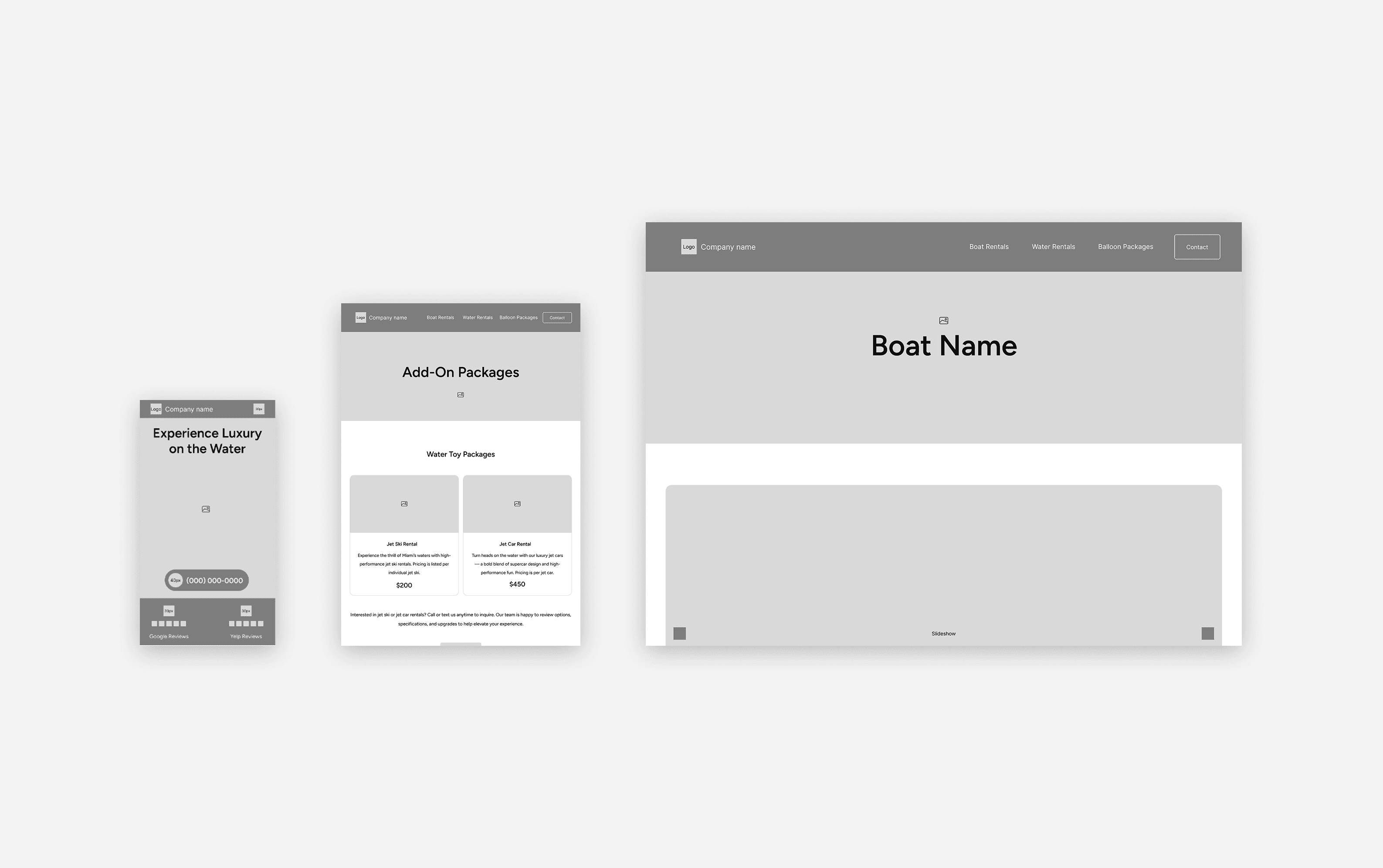
Using mid-fidelity wireframes to validate hierarchy and improve clarity before implementation.
Even though the final site was built on a Framer template, I recreated the layout in Figma to test information hierarchy, grouping, and flow without affecting the live experience. This allowed me to experiment with boat cards, add-ons, pricing, and CTAs in a safe environment, identify areas needing clarity, and iterate quickly on UX decisions. The mid-fidelity wireframes served as a sandbox bridging strategy and execution, ensuring structural changes were purposeful and user-centered.
Using mid-fidelity wireframes to validate hierarchy and improve clarity before implementation.
Even though the final site was built on a Framer template, I recreated the layout in Figma to test information hierarchy, grouping, and flow without affecting the live experience. This allowed me to experiment with boat cards, add-ons, pricing, and CTAs in a safe environment, identify areas needing clarity, and iterate quickly on UX decisions. The mid-fidelity wireframes served as a sandbox bridging strategy and execution, ensuring structural changes were purposeful and user-centered.
Using mid-fidelity wireframes to validate hierarchy and improve clarity before implementation.
Even though the final site was built on a Framer template, I recreated the layout in Figma to test information hierarchy, grouping, and flow without affecting the live experience. This allowed me to experiment with boat cards, add-ons, pricing, and CTAs in a safe environment, identify areas needing clarity, and iterate quickly on UX decisions. The mid-fidelity wireframes served as a sandbox bridging strategy and execution, ensuring structural changes were purposeful and user-centered.
The Initial Design
The Initial Design
The Initial Design
Phase 4: Design
Phase 4: Design
A high-fidelity prototype was created to translate the defined user flow into a realistic interface and evaluate structural clarity before iteration.
This prototype focused on establishing the core structure of the yacht browsing and broker inquiry experience. It provided a tangible version of the user flow that could be observed and tested, helping identify areas of friction and informing decisions for future iterations.
A high-fidelity prototype was created to translate the defined user flow into a realistic interface and evaluate structural clarity before iteration.
This prototype focused on establishing the core structure of the yacht browsing and broker inquiry experience. It provided a tangible version of the user flow that could be observed and tested, helping identify areas of friction and informing decisions for future iterations.
A high-fidelity prototype was created to translate the defined user flow into a realistic interface and evaluate structural clarity before iteration.
This prototype focused on establishing the core structure of the yacht browsing and broker inquiry experience. It provided a tangible version of the user flow that could be observed and tested, helping identify areas of friction and informing decisions for future iterations.
Early User Testing
Early User Testing
Early User Testing
Phase 5: Test
Phase 5: Test
Users navigated yacht discovery with ease, but uncertainty around total cost and add-ons reduced booking confidence.
- Browse the available yachts and select one that meets your preferences.
- Review the yacht’s details, including size, amenities, and pricing.
- Explore any optional extras, such as water rentals or event packages.
- Determine how you would inquire and find out the total price from the broker before completing booking and payment.
Users navigated yacht discovery with ease, but uncertainty around total cost and add-ons reduced booking confidence.
- Browse the available yachts and select one that meets your preferences.
- Review the yacht’s details, including size, amenities, and pricing.
- Explore any optional extras, such as water rentals or event packages.
- Determine how you would inquire and find out the total price from the broker before completing booking and payment.
- Reflect on whether the information provided is sufficient to make a confident booking decision.
Users navigated yacht discovery with ease, but uncertainty around total cost and add-ons reduced booking confidence.
- Browse the available yachts and select one that meets your preferences.
- Review the yacht’s details, including size, amenities, and pricing.
- Explore any optional extras, such as water rentals or event packages.
- Determine how you would inquire and find out the total price from the broker before completing booking and payment.
Strategic UX Improvements
Strategic UX Improvements
Strategic UX Improvements
Phase 5: Test
Phase 5: Test
A quote generator, clearer interaction cues, and a scalable fleet structure improved pricing transparency and strengthened inventory discoverability.
A quote generator, clearer interaction cues, and a scalable fleet structure improved pricing transparency and strengthened inventory discoverability.
Boat Quote Generator
Boat Quote Generator
Users struggled to estimate total cost when selecting yachts and extras. The quote generator consolidates all pricing dynamically across all breakpoints, allowing users to see the full-day total without manual calculation. This reduces cognitive load and supports informed inquiry decisions.
Users struggled to estimate total cost when selecting yachts and extras. The quote generator consolidates all pricing dynamically across all breakpoints, allowing users to see the full-day total without manual calculation. This reduces cognitive load and supports informed inquiry decisions.
Users struggled to estimate total cost when selecting yachts and extras. The quote generator consolidates all pricing dynamically across all breakpoints, allowing users to see the full-day total without manual calculation. This reduces cognitive load and supports informed inquiry decisions.
CTA Buttons
CTA Buttons
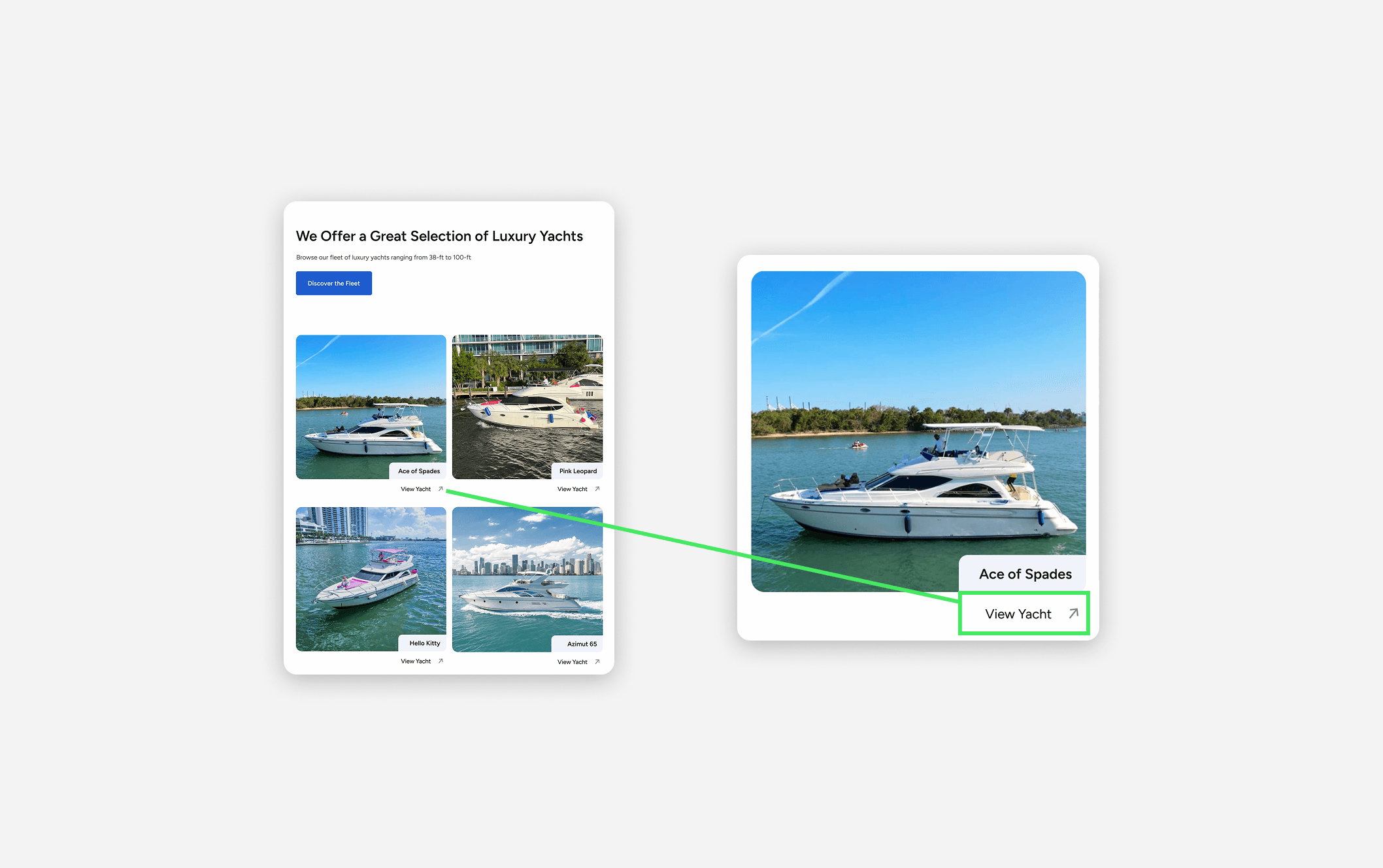
Clickable boat cards were not always recognized. Adding a clear “View Yacht” CTA strengthened interaction cues and helped users engage with individual listings confidently.
Clickable boat cards were not always recognized. Adding a clear “View Yacht” CTA strengthened interaction cues and helped users engage with individual listings confidently.
Clickable boat cards were not always recognized. Adding a clear “View Yacht” CTA strengthened interaction cues and helped users engage with individual listings confidently.
Discover the Fleet Page
Discover the Fleet Page
As inventory expanded, the homepage became crowded. A dedicated Discover Fleet page centralizes browsing, enabling users to scan, filter, and compare boats efficiently while keeping the homepage clear and focused.
As inventory expanded, the homepage became crowded. A dedicated Discover Fleet page centralizes browsing, enabling users to scan, filter, and compare boats efficiently while keeping the homepage clear and focused.
As inventory expanded, the homepage became crowded. A dedicated Discover Fleet page centralizes browsing, enabling users to scan, filter, and compare boats efficiently while keeping the homepage clear and focused.
Final Test Findings
Final Test Findings
Final Test Findings
Phase 5: Test
Phase 5: Test
Automating broker communication through the quote generator reduced task time by 90% and made pricing 24% faster for users.
Automating broker communication through the quote generator reduced task time by 90% and made pricing 24% faster for users.
Automating broker communication through the quote generator reduced task time by 90% and made pricing 24% faster for users.
The Final Design
The Final Design
The Final Design
Phase 6: Launch
Phase 6: Launch
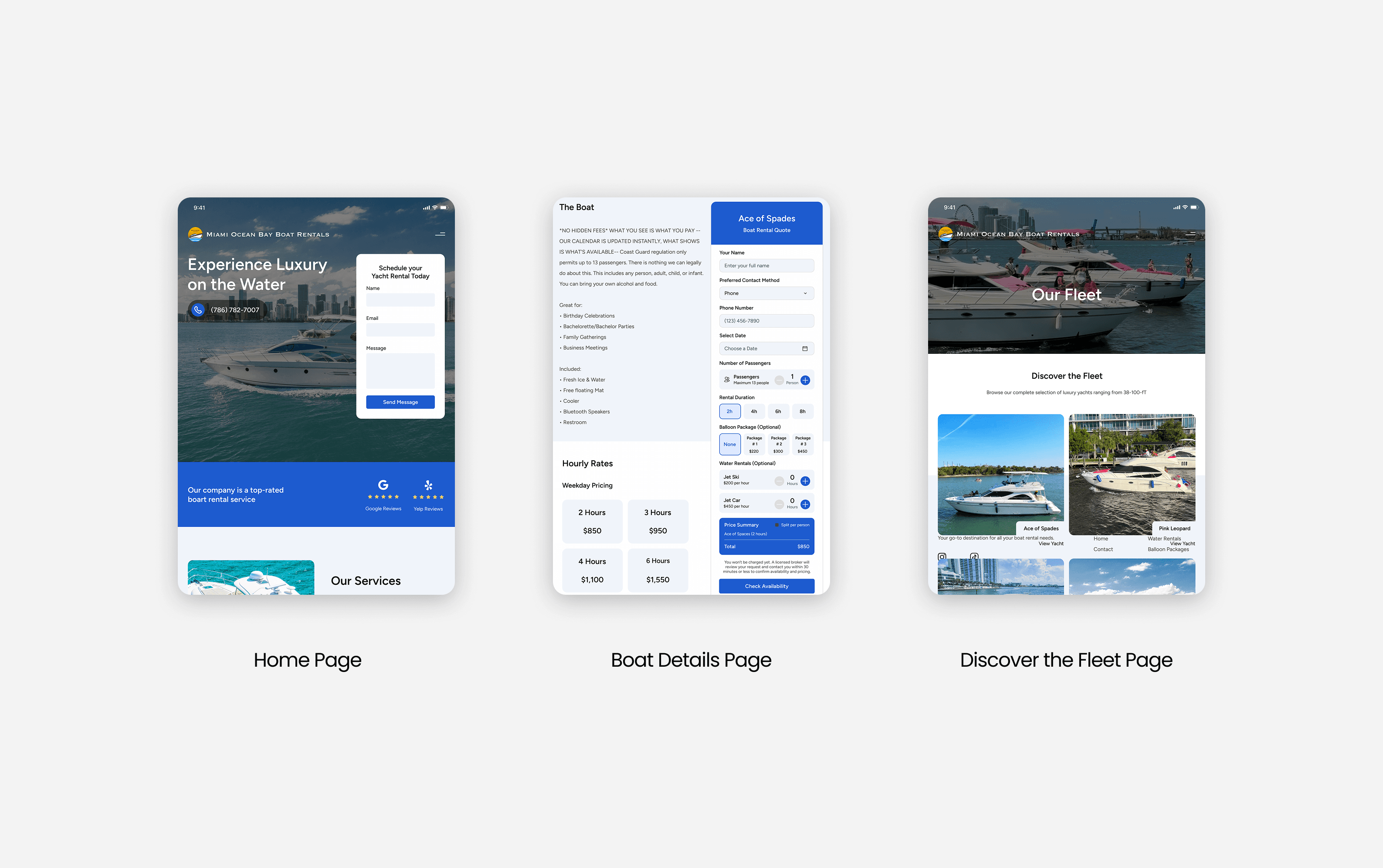
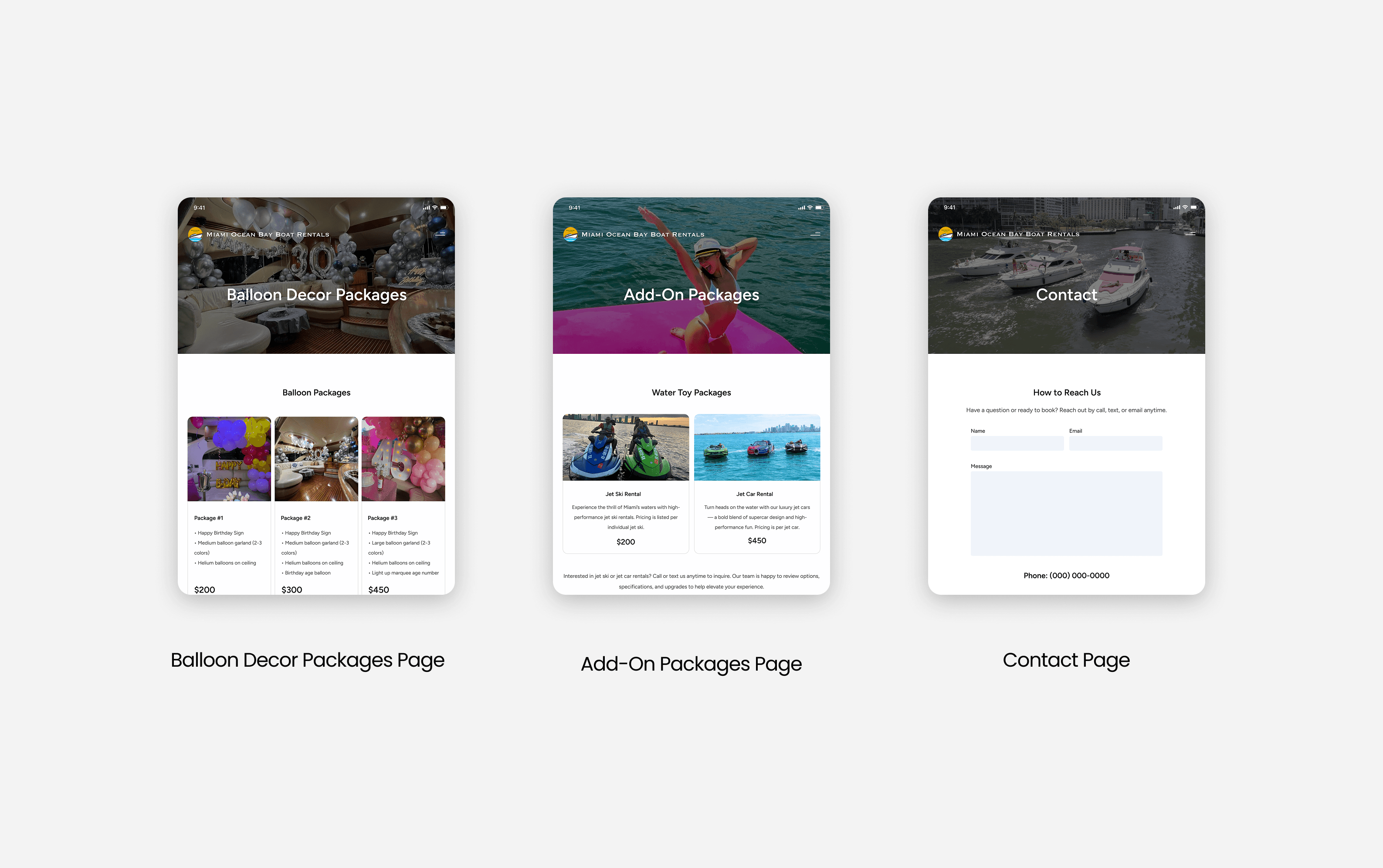
A cohesive, user-centered platform that supports scalable yacht exploration and informed inquiry.
A cohesive, user-centered platform that supports scalable yacht exploration and informed inquiry.
A cohesive, user-centered platform that supports scalable yacht exploration and informed inquiry.
Conclusion + Reflection
Conclusion + Reflection
Conclusion + Reflection
Phase 6: Launch
Phase 6: Launch
Learnings and Next Steps
This project was my first full-cycle UX project for a real client, offering invaluable experience applying design principles in a professional context. I gained insights from user testing, client constraints, and iterative design decisions, all of which helped improve the usability and clarity of the platform. Building on these experiences, the next steps focus on enhancing the user experience and refining the platform further.
Conduct additional usability testing with a larger and more diverse group of users.
Explore potential new features, such as improved booking tools or filtering options, to make the platform more efficient for users.
Refine visual and interaction details based on user feedback to improve clarity and delight.
Overall, this project reinforced my understanding of user-centered design and strengthened my skills in delivering practical, impactful solutions for real clients.
What I'd do differently next time.
- Clarify requirements and constraints earlier. Working with a real client introduced unexpected limitations around booking and operational rules. Next time, I would spend more time upfront aligning with the client on functional constraints to reduce revisions and ensure design decisions are feasible from the start.
- Gather more targeted user insights. While usability testing provided valuable feedback, working on a live client project highlighted the importance of testing with a representative audience early. I would conduct broader, scenario-based testing sooner to uncover potential pain points before finalizing design changes.
- Communicate design rationale more proactively. Real client projects require clear justification for design choices. I learned that explaining decisions in the context of user needs and business goals helps stakeholders understand and trust the design process, reducing back-and-forth and revisions.
Learnings and Next Steps
This project was my first full-cycle UX project for a real client, offering invaluable experience applying design principles in a professional context. I gained insights from user testing, client constraints, and iterative design decisions, all of which helped improve the usability and clarity of the platform. Building on these experiences, the next steps focus on enhancing the user experience and refining the platform further.
Conduct additional usability testing with a larger and more diverse group of users.
Explore potential new features, such as improved booking tools or filtering options, to make the platform more efficient for users.
Refine visual and interaction details based on user feedback to improve clarity and delight.
Overall, this project reinforced my understanding of user-centered design and strengthened my skills in delivering practical, impactful solutions for real clients.
What I'd do differently next time.
- Clarify requirements and constraints earlier. Working with a real client introduced unexpected limitations around booking and operational rules. Next time, I would spend more time upfront aligning with the client on functional constraints to reduce revisions and ensure design decisions are feasible from the start.
- Gather more targeted user insights. While usability testing provided valuable feedback, working on a live client project highlighted the importance of testing with a representative audience early. I would conduct broader, scenario-based testing sooner to uncover potential pain points before finalizing design changes.
- Communicate design rationale more proactively. Real client projects require clear justification for design choices. I learned that explaining decisions in the context of user needs and business goals helps stakeholders understand and trust the design process, reducing back-and-forth and revisions.
Learnings and Next Steps
This project was my first full-cycle UX project for a real client, offering invaluable experience applying design principles in a professional context. I gained insights from user testing, client constraints, and iterative design decisions, all of which helped improve the usability and clarity of the platform. Building on these experiences, the next steps focus on enhancing the user experience and refining the platform further.
Conduct additional usability testing with a larger and more diverse group of users.
Explore potential new features, such as improved booking tools or filtering options, to make the platform more efficient for users.
Refine visual and interaction details based on user feedback to improve clarity and delight.
Overall, this project reinforced my understanding of user-centered design and strengthened my skills in delivering practical, impactful solutions for real clients.
What I'd do differently next time.
- Clarify requirements and constraints earlier. Working with a real client introduced unexpected limitations around booking and operational rules. Next time, I would spend more time upfront aligning with the client on functional constraints to reduce revisions and ensure design decisions are feasible from the start.
- Gather more targeted user insights. While usability testing provided valuable feedback, working on a live client project highlighted the importance of testing with a representative audience early. I would conduct broader, scenario-based testing sooner to uncover potential pain points before finalizing design changes.
- Communicate design rationale more proactively. Real client projects require clear justification for design choices. I learned that explaining decisions in the context of user needs and business goals helps stakeholders understand and trust the design process, reducing back-and-forth and revisions.